Coral Experiment
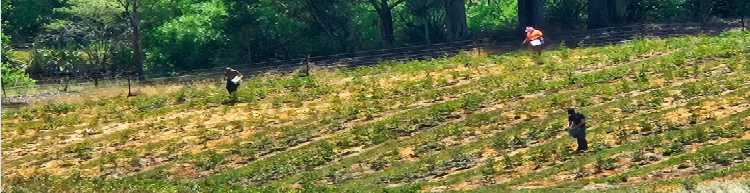
You might remember a while back I shared a bit of a "mad scientist" project we started on the farm. If you missed it, you can catch up on the backstory here, but the short version is this: we decided to stop guessing and start testing how to make our dirt—well, better.
As any gardener (or business owner) knows, you can’t get great results out of a depleted system. For us, better dirt means stronger plants, which leads to the holy grail: more flowers and better quality stems. So, we set up a trial block focused on our Coral Sunsets —where we tested different "recipes" to see what the peonies liked best. We had rows treated with compost, some with sawdust, others with pea straw, and of course, the "control" rows where we did absolutely nothing special.
The goal? To find the secret sauce for our soil.
The Season of "Wait, What Happened?"
Coming into this most recent season, we decided to let the previous year’s hard work do the talking. We didn’t add any new organic matter to the rows. We just gave the whole block a standard "snack" of synthetic fertiliser and waited for the magic to happen.
Well, Mother Nature had other plans.
When we started counting stems this year, the numbers weren't just a bit off—they were well down across the entire block. Now, as a business owner, seeing your "production line" slow down can be a bit gut-wrenching. You start asking yourself, “Did I miss something? Did the experiment fail?”
But then I took a look over the fence.
If you’ve been following my adventures with our farm robot, The Burro, you’ll know that Nelson’s weather lately has been... let’s call it "challenging." Between the rain and the weird temperature swings, the climate hasn't exactly been throwing a party for peonies. The "market rumours" (which is just a fancy way of saying chats with other growers over a coffee) confirmed it: everyone is down. In fact, many are seeing much sharper drops in volume than we are.
It’s a good reminder that sometimes, despite your best efforts, there are variables you just can’t control. But—and this is the exciting part—even in a "bad" year, the data still tells a story.
The Winners (and the Not-So-Winners)
Even though the total numbers were lower than last year, the gap between the different treatments was eye-opening.
- The Champs: The rows treated with compost and sawdust were the clear standouts. They held their ground far better than the rest.
- The Middle Ground: The pea straw rows were okay, but they didn’t have the same "staying power" as the compost and sawdust.
- The Bottom of the Class: The control rows—the ones we left to fend for themselves—were the worst performers by a long shot.
It’s funny, isn't it? We often think we can save time or money by skipping the "extra" steps. But the control rows proved that doing nothing actually costs you more in the long run through lost production.
What’s the Lesson Here?
So, what have I learned from our dirt this year?
Firstly, it confirms that a regular "investment" in your foundation—in this case, applying compost or sawdust—isn't just a nice-to-have. it's a must-have for consistent performance. It’s like a savings account for the plants; when the "weather" gets tough, those plants have more in the tank to draw from.
Secondly, it got me thinking about how this applies beyond the farm gate. How often do we neglect the "dirt" in our businesses or our lives because we’re too busy looking at the "flowers"? We focus on the end result but forget to nourish the environment that produces that result.
Are we putting in the "compost"—the training, the culture-building, the rest—on a regular basis? Or are we just running a "control row" and wondering why the yield is down when things get a bit stormy?
Looking Ahead
The Coral Experiment continues! The results so far have given me the confidence to keep doubling down on soil health. It might not be a quick fix, and it certainly won't stop the rain from falling, but it gives our peonies the best possible fighting chance.
I’d love to hear from you—have you ever tried a "back to basics" experiment that surprised you? Or perhaps you've noticed that your "foundational work" saved you when things got a bit sideways?